
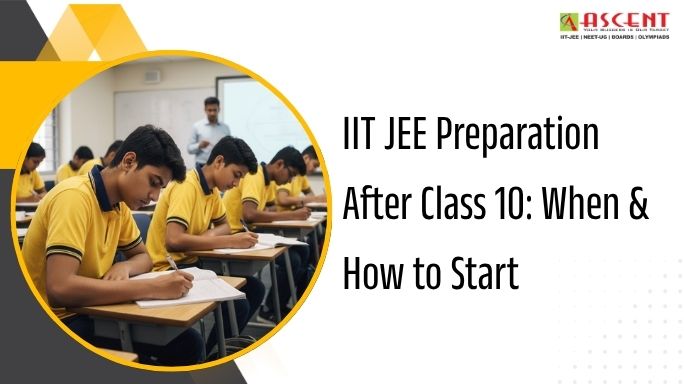

The journey to premier engineering institutions begins much earlier than most students realize. For ambitious students eyeing top engineering colleges, understanding IIT JEE preparation after Class 10 becomes crucial in building a strong foundation.
The transition from secondary school to the senior secondary level marks a pivotal moment in every engineering aspirant’s academic career. This is precisely when the complexity of concepts increases dramatically, competition intensifies, and the need for structured preparation becomes evident. Students who begin their groundwork early often find themselves better equipped to handle the rigorous demands of competitive examinations.
Why Starting Early Makes All the Difference
The question of how to start IIT JEE preparation after 10th often crosses the minds of students and parents alike. The answer lies in understanding the sheer volume of syllabus content and the depth of conceptual clarity required. Beginning preparation immediately after secondary school completion provides approximately two years of focused study time — essential for mastering Physics, Chemistry, and Mathematics at an advanced level.
The Foundation Year: Building Your Academic Base
Understanding how to prepare for IIT after 10th requires recognizing that the first year after secondary school is fundamentally about building blocks. During this period, students should focus on strengthening their grasp of basic concepts in all three core subjects.
Mathematics forms the backbone of problem-solving, Physics requires both conceptual understanding and mathematical application, while Chemistry demands a balance between theory and practical knowledge. The foundation year should emphasize understanding over memorization — students must learn to approach problems from first principles rather than relying on formula-based shortcuts.
Creating an Effective Study Schedule
When exploring how to start IIT JEE preparation after 10th, developing a realistic and sustainable study schedule ranks among the most critical steps. A well-structured timetable should allocate dedicated hours for each subject while maintaining balance. Typically, students should aim for four to six hours of focused study daily beyond regular school hours.
“The schedule should incorporate breaks to prevent fatigue. Physical exercise, adequate sleep, and recreational activities are essential for maintaining mental sharpness.”
To make your preparation more efficient, following an effective study plan for competitive exams can help you stay consistent and avoid burnout.
Subject-Wise Preparation Strategy
Mathematics
Begin with algebra, coordinate geometry, and trigonometry. Move to calculus after mastering basics. Daily practice builds speed and analytical thinking.
Physics
Prioritize understanding physical phenomena over memorizing formulas. Mechanics, thermodynamics, and electromagnetism form major portions.
Chemistry
Balance physical, organic, and inorganic chemistry equally. Physical chemistry needs math, organic needs mechanistic understanding.
Mathematics: Regular problem-solving sessions develop speed and accuracy, while attempting challenging questions builds analytical thinking capabilities.
Physics: Visualization and diagrammatic representation of problems significantly improve comprehension and problem-solving efficiency.
Chemistry: Inorganic chemistry involves both memorization and logical reasoning for periodic trends and reactions — don’t neglect it.
The Role of Guidance and Mentorship
For students contemplating IIT JEE preparation after Class 10, having the right guidance can make a substantial difference. Experienced mentors help students navigate complex topics, identify efficient study methods, and maintain motivation during challenging phases.
Common Mistakes to Avoid
When considering how to prepare for IIT after 10th, awareness of common pitfalls helps students chart a smoother course.
Mistake #1
Neglecting school academics while focusing exclusively on competitive preparation. Board and entrance exams share significant overlap — integrated preparation is more efficient.
Mistake #2
Attempting too many study resources simultaneously, leading to confusion rather than clarity. Pick trusted materials and go deep.
Mistake #3
Underestimating the importance of revision. Moving to new topics without consolidating previous learning leads to shallow understanding.
Mistake #4
Ignoring health and well-being in pursuit of extra study hours. Mental and physical fatigue significantly diminish learning efficiency.
Beyond Academics: Developing the Right Mindset
Success in competitive examinations extends beyond academic preparation to psychological readiness. IIT JEE preparation after Class 10 should include developing resilience, managing stress, and maintaining confidence through setbacks. Students who view challenges as growth opportunities rather than obstacles tend to perform better under examination pressure.
Developing a positive relationship with learning transforms preparation from a burden into an engaging pursuit. Curiosity-driven study leads to deeper understanding and longer retention compared to fear-driven cramming. Students should celebrate small victories along the way, recognizing progress in previously challenging areas.
Final Year Preparation: Consolidation and Practice
The final year before examinations should focus heavily on revision and practice testing. By this stage, most of the syllabus coverage should be complete, allowing students to identify remaining gaps and address them systematically. Solving previous years’ question papers provides invaluable insight into examination patterns and expected difficulty levels.
Mock examinations become increasingly important during this phase. They help students develop time allocation strategies for different sections and build stamina for lengthy examination durations. Analyzing mistakes from practice tests reveals recurring error patterns that can be specifically targeted for improvement.